Trade ordering apps for wholesalers
Trade customers order by phone and WhatsApp, and somebody types those orders in again. The mistakes show up at delivery, where they are expensive. An ordering app means the order is typed once, by the person who knows what they wanted.
What makes trade ordering different from retail
Retail e-commerce assumes one price for everybody and a card at checkout. Wholesale does not. Prices differ per account, customers buy on credit terms, orders go out on a van against a cut-off time, and the same customer orders the same twenty lines every week.
That is why a standard shop platform fights you here and why most wholesalers end up back on the phone.
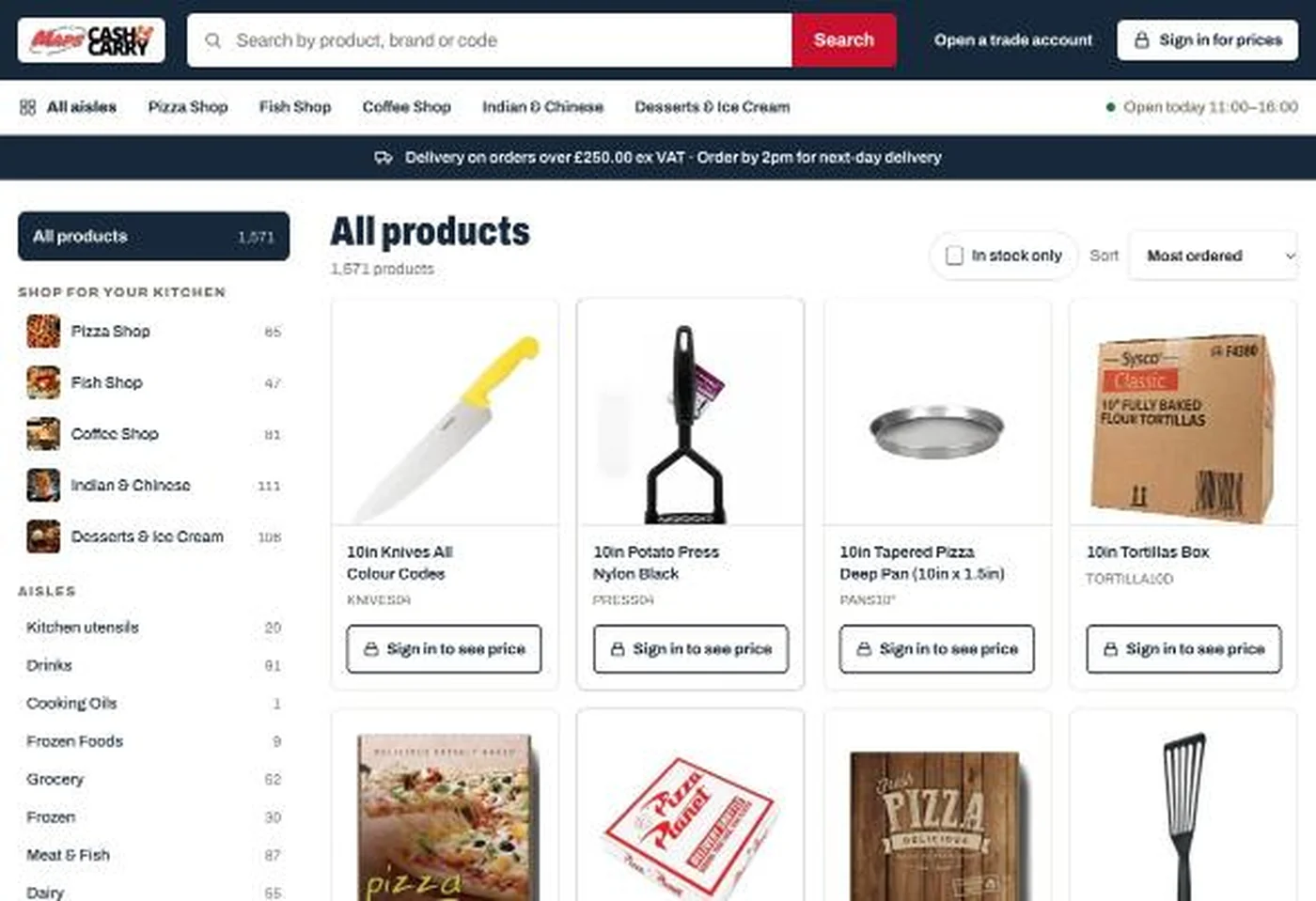
- Pricing tiers per trade account, with prices hidden until sign-in
- Repeat ordering that rebuilds last week's basket
- Delivery cut-off times and minimum order values applied at the basket
- Credit accounts rather than card at checkout
What we built for a cash and carry in Leicester
They were running on WooCommerce with Sage 50 behind it. We replaced both with one Laravel and PostgreSQL platform: a Next.js trade storefront, a customer ordering app, a staff app for the counter and warehouse, a counter POS and a driver app.
They switched Sage 50 off. Orders are typed once, by the customer, and the counter runs off a tablet.
- 1,571 products live, priced per account
- Delivery over £250 ex VAT, ordered by 2pm for next day
- Invoices and delivery notes printed from the counter
- Signature and photo proof of delivery from the driver's phone
What it costs
A fixed price against a written scope, agreed before anything is built. The repository and the server are in your company name, and the monthly cost after launch is a support agreement that lists exactly what it covers.
Questions people ask before starting
Can it show different prices to different customers?+
Yes. Pricing tiers are tied to the trade account, and prices are hidden entirely until a customer signs in, which is how most wholesalers prefer it.
Can it replace our accounting software?+
Partly, and carefully. An ordering platform can take over the sales side, but accounts need a proper ledger behind them. We have done this migration and would scope the accounting work separately rather than promise it as a by-product.
Do our reps still need to take orders?+
For some customers, yes, and the staff app lets them. The point is not to remove the rep but to stop the same order being typed twice.
What about customers who will never use an app?+
They carry on phoning, and staff enter the order in the same system. One catalogue and one stock figure behind every channel is the whole benefit.